home Home > FAQ Technology description of cooking oil refinery plant

Technology description of cooking oil refinery plant

edible oil refining machine

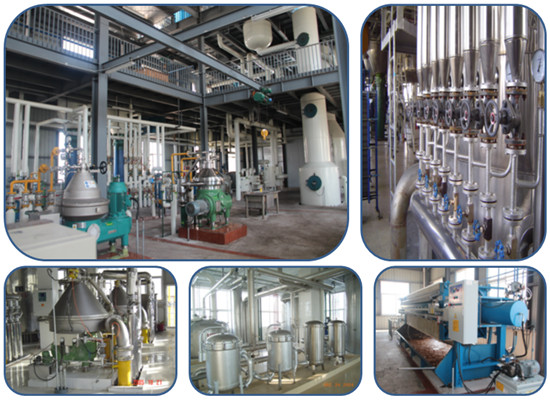
Edible oil refining workshop

Refining the crude edible oil:
1.The refined is to remove color, odor, and bitterness. Refining consists of heating the oil to between 107 and 188 degrees Fahrenheit (40 and 85 degrees Celsius) and mixing an alkaline substance such as sodium hydroxide or sodium carbonate with it. Soap forms from the undesired fatty acids and the alkaline additive, and it is usually removed by centrifuge. The oil is further washed to remove traces of soap and then dried.
2. Oils are also degummed at this time by treating them with water heated to between 188 and 206 degrees Fahrenheit (85 and 95 degrees Celsius), steam, or water with acid. The gums, most of which are phosphatides, precipitate out, and the dregs are removed by centrifuge.
3. Oil that will be heated (for use in cooking) is then bleached by filtering it through fuller's earth, activated carbon, or activated clays that absorb certain pigmented material from the oil. By contrast, oil that will undergo refrigeration (because it is intended for salad dressing, for example) is winterized—rapidly chilled and filtered to remove waxes. This procedure ensures that the oil will not partially solidify in the refrigerator.
4.Finally, deodorized process, steam is passed over hot oil in a vacuum at between 440 and 485 degrees Fahrenheit (225 and 250 degrees Celsius), thus allowing the volatile taste and odor components to distill from the oil. Typically, citric acid at. 01 percent is also added to oil after deodorization to inactivate trace metals that might promote oxidation within the oil and hence shorten its shelf-life.


Packaging the refined edible oil:
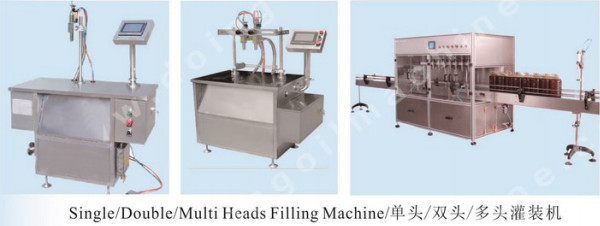
edible oil filling machine
Refined edible oil filling machine

The completely processed oil is measured and poured into clean containers, usually plastic bottles for domestic oils to be sold in supermarkets, glass bottles for imports or domestic oils to be sold in specialty stores, or cans for imports (usually olive oil).


  • QDo you want to buy machine?
  • Yes, I want to buy machine.
  • No, I want to learn more in advance.
  • QWhat oil seeds do you want to process?
  • Palm fruit
  • Palm kernel/nut
  • Peanut/Groundnut
  • Soybean/Soya bean
  • Sunflower seed
  • Cottonseed
  • Rapeseed/Canola
  • Dried coconut
  • Rice bran
  • Corn germ
  • More than two oilseeds:
  • Other:
  • QHow many tons palm fruit bunches will you process per day?
  • 1-10 tons per day
  • 10-30 tons per day
  • 30-50 tons per day
  • 50-100 tons per day
  • QWhat machine do you want?
  • Palm oil presser
  • Other single machine (thresher, clarification tank, vibrating screen, filter...)
  • Palm oil pressing line (from FFB to crude oil)
  • Palm oil refining line (to produce refined, bleached, deodorized oil)
  • Palm oil bottling / filling line
  • QWhat machine do you want?
  • Palm oil pressing line (from FFB to crude oil)
  • Palm oil refining line (to produce refined, bleached, deodorized oil)
  • Palm oil bottling / filling line
  • QHow many tons oil seeds will you process per day?
  • 1-20 tons per day
  • 20-50 tons per day
  • 50-100 tons per day
  • QWhat machine do you want?
  • Oil presser
  • Other single machine (cracker, crusher, roaster, filter...)
  • Oil pressing line (from seeds to crude oil)
  • Oil refining line (to produce refined, bleached, deodorized oil)
  • Oil bottling / filling line
  • QWhat machine do you want?
  • Oil presser
  • Oil pressing line (from seeds to crude oil)
  • Oil solvent extraction line
  • Oil refining line (to produce refined, bleached, deodorized oil)
  • Oil bottling / filling line
  • QWhat machine do you want?
  • Oil pressing line (from seeds to crude oil)
  • Oil solvent extraction line
  • Oil refining line (to produce refined, bleached, deodorized oil)
  • Oil bottling / filling line
Send message